
Watch any marathon at mile one, and you can almost guess what's coming.
A few runners sprint to the front. They look strong. They look fast. They look like winners.
By mile ten, most of them are walking.
The runners who finish well, sometimes even at the top, are usually the ones who never stood out at the start. They paced themselves. They held something back. They trusted the long road more than the loud one.
That is the Bamboo Farmer's way.
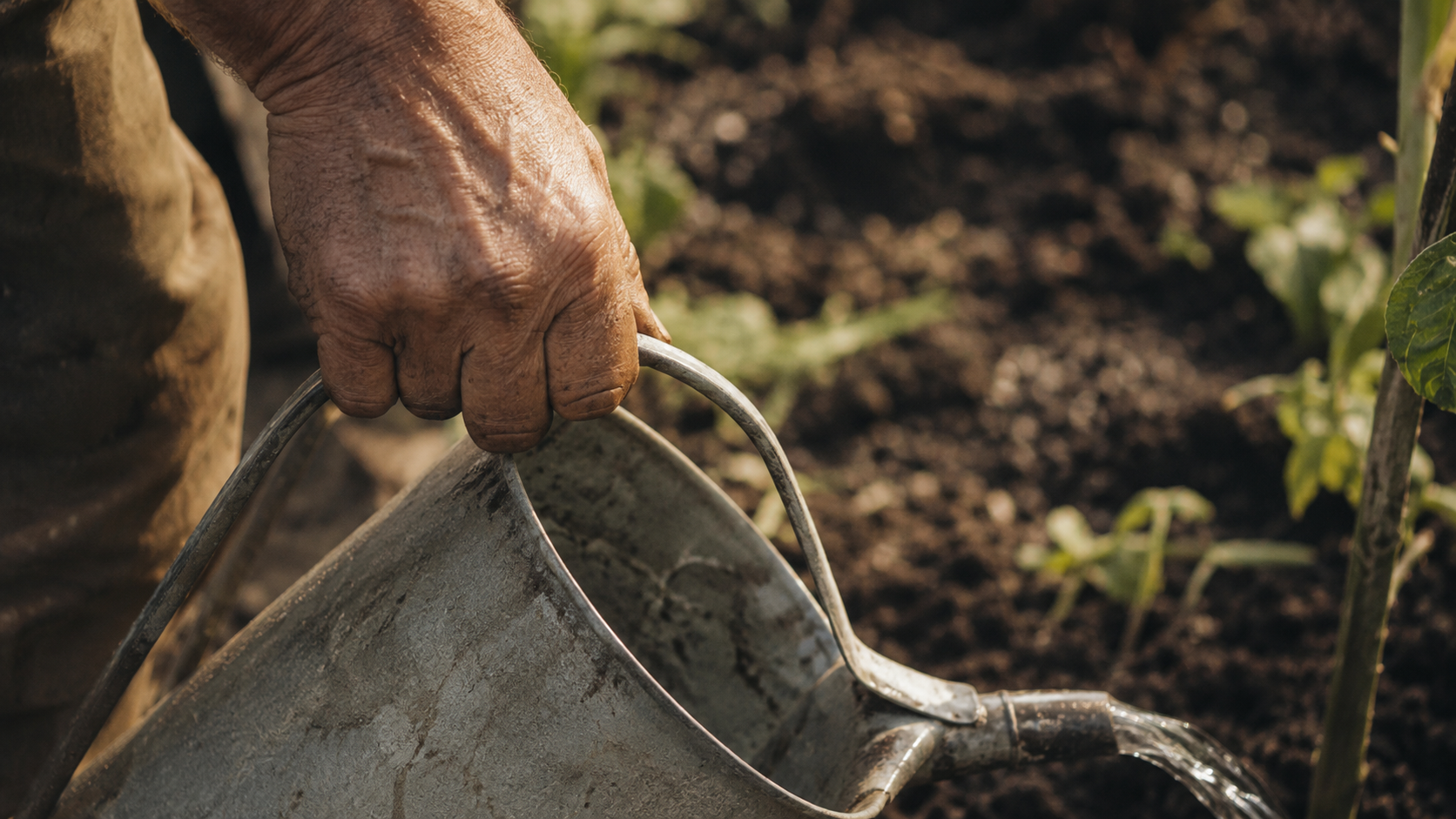
Self-discipline is not the loud part of leadership. It is the quiet part. It happens before the meeting, before the speech, before anyone is watching. It is the slow, daily decision to water the bamboo, whether or not you feel like it.
Warren Buffett once told a room of college graduates that everyone in front of him had the ability to do anything he had done and more. Some of them would. Some of them would not. And the ones who did not, he said, would not be stopped by the world. They would be stopped by themselves.
Self-mastery is the prerequisite to success.
The word discipline shares a root with disciple. It means "to teach." Self-discipline is a form of teaching yourself. You are both the student and the teacher. Be patient with the student. Be honest with the teacher.
With that foundation, here are five quiet practices that help.
1. Take Decisions Off Your Plate
Willpower is finite. Every small decision pulls from the same well. Should I work out? What should I eat? What should I wear? By noon, the well is half empty, and the choices that actually matter are starving for energy.
The Bamboo Farmer does not stand at the edge of the field each morning, debating whether today is a watering day. There is no debate. There is only the bucket and the field.
You can build that same simplicity into your life. Set the workout time before the week begins. Prep the meals on Sunday. Pick the clothes the night before. The fewer choices you make about the routine, the more you have left for the work that matters.
Bamboo Farmer lesson: Make habits automatic so your energy fuels what matters. The key takeaway: Automated routines help you maintain focus on important work.
2. Prepare the Field
Discipline lives or dies in the environment around you.
If snacks are in the cupboard, you'll eat them. If your phone is on the desk, you'll check it. People around you influence your habits.
The Bamboo Farmer does not blame the seed when nothing grows. They look at the soil. They check the field. They clear the rocks before they plant.
Look at your own field. What is in your space that pulls you off track? What is missing that would make watering easier? Who are you spending time with that helps you grow, and who is quietly draining the well?
You do not have to white-knuckle your way through every day. Often, the better move is to redesign the field so the right action becomes the easy one.
Bamboo Farmer lesson: Prepare your environment to let good habits grow naturally. Takeaway: Shape your space to make discipline easier.
3. Put Something on the Line
We move faster to avoid pain than to chase pleasure. That is not a flaw. It is a feature. You can use it.
When only your own good intentions are on the line, the early morning gets quiet, and the bucket stays in the shed. When you have told your team, your spouse, your coach, and your Bamboo Circle, skipping carries a cost. You have to face someone. You have to explain.
Tell people what you are working on. Ask a partner to check in. Put your goal somewhere you cannot hide from it. The more it costs to skip, the more likely you are to show up.
Bamboo Farmer lesson: Make not showing up costlier than sticking to the habit. Key takeaway: Accountability increases consistency.
4. Rewrite Your Inner Story
There is a voice in your head that talks all day long. Psychologists say the average person has more than 60,000 thoughts a day, and most of them are negative.
That voice carries a story about who you are. If the story says, "I am not disciplined," your actions will quietly work to prove it true. If the story says, "I am someone who waters the bamboo, even on the hard days," your actions will start to align with it.
When the old story shows up, do not argue with it. Offer a new one. "I am growing stronger every day." "I am the kind of leader who finishes what I start." "My roots are getting deeper, even when no one can see."
The roots are the work. The growth is the result.
Bamboo Farmer lesson: Trust growth below the surface. Takeaway: Progress is invisible before it becomes visible.
5. Care for the Farmer
A depleted farmer cannot water the field.
Sleep, food, movement, and rest support every disciplined day. You cannot water with an empty bucket.
Put your well-being on the agenda. No one else will. Protect your sleep like you protect your most important meeting. Move your body before the day fills up. Eat in a way that gives you energy instead of taking it.
Caring for yourself is how you keep showing up for the people who count on you. A leader running on fumes cannot bring much to the field, no matter how strong their intentions are.
Bamboo Farmer lesson: A cared-for farmer endures. Takeaway: Prioritize self-care to sustain high performance.
The Leadership Lesson
Self-discipline is the Bamboo Farmer's quiet strength. It is rarely seen or applauded. It grows in early mornings, empty rooms, and small, daily choices.
And then one season, the bamboo breaks through. Ninety feet in sixty days.
You will be tempted to call it overnight. You will know better.
Do not drown it. Do not skip it. Just water it.